
2-Day Masterclass on
Healthcare Fire Safety
Prevention, Preparedness & Emergency Response
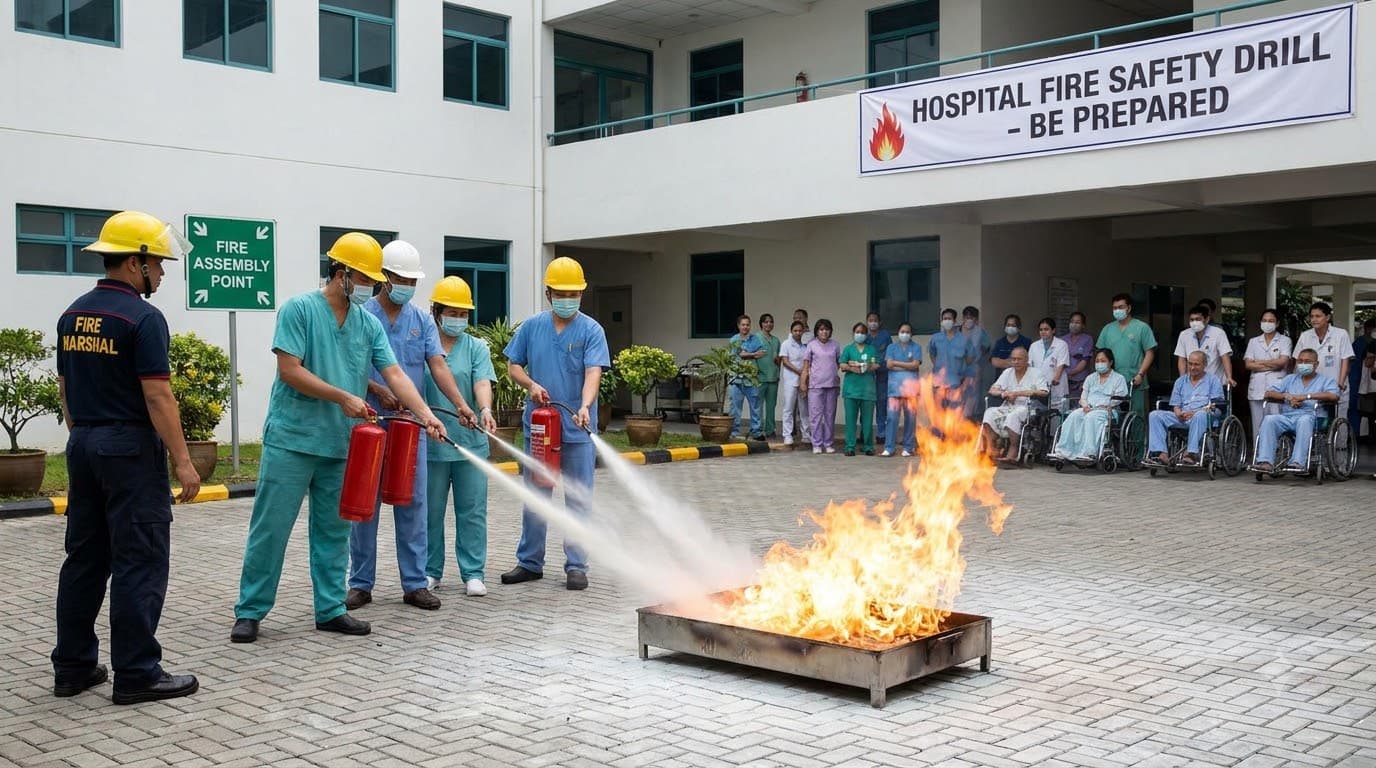
Build preventive, responsive, and system-level safety competencies in hospital environments. Integrates classroom theory, hands-on fire extinguisher demonstrations, and a live hospital mock drill at Coras Hospital.
Why Hospital Fire Safety Requires Specialized Hands-On Training
A comprehensive, practice-oriented training program designed to build preventive, responsive, and system-level safety competencies in hospital environments. The program integrates fire safety preparedness, and real-time hospital-based exposure to ensure implementation readiness.
Critical ICU & OT Zones
Oxygen-enriched environments accelerate flame spread exponentially during electrical or equipment failures.
Non-Ambulatory Patients
Bed-ridden, neonate, and surgical patients require specialized horizontal & vertical evacuation protocols.
Statutory & NABH Compliance
Meets NABH disaster management standards and national hospital fire safety regulatory frameworks.
Practice-Oriented Integration
Bridging theoretical knowledge with real-time hospital exposure to ensure immediate implementation readiness across clinical and administrative teams.
System-Level Competencies
Establishes robust department-wise fire risk mapping and early warning mechanisms.
Hands-On Extinguisher Demo
Practical PASS technique instruction for immediate containment of Class A, B, C, D & Electrical fires.
Live Hospital Mock Drill
Day-2 live exercise at Coras Hospital simulating Code Red, patient triage, and evacuation.
Post-Drill Debriefing
Data-backed response time analysis to evaluate operational gaps and equipment readiness.
Program Objectives
Designed to transform hospital staff into confident, swift, and compliant emergency responders.
Primary Objectives
Ensure life safety of patients, visitors, healthcare professionals, and staff.
Build fire prevention, emergency response, and evacuation competence.
Achieve statutory compliance and fulfill NABH accreditation mandates.
Create a fully trained internal fire response team for rapid action.
Secondary Objectives
Reduce panic and emergency response time during fire incidents.
Improve seamless coordination between clinical, non-clinical, and support staff.
Aligns with NABH accreditation rules for internal fire response teams & periodic disaster drills.
Who Should Attend?
Fire safety is a collective hospital responsibility. Every department plays a vital role during emergencies.
Clinical Staff
Doctors, Nurses, Paramedics
Frontline caregivers responsible for bedside patient safety, triage, and critical evacuation decisions.
Critical Area Staff
ICU, OT, Emergency, Oxygen Plant
High-risk department teams operating medical gas systems and managing bed-ridden patients during Code Red.
Support Services
Housekeeping, Security, Maintenance
First responders handling initial containment, smoke control systems, utility shutoffs, and exit clears.
Non-Clinical Staff
Front Office, Billing, HR
Key communication bridges organizing assembly points, crowd control, and visitor guidance.
Management & Officers
Administrators, Safety Officers
Strategic leaders establishing hospital disaster policies, statutory audits, and emergency governance.
2-Day Masterclass Learning Journey
A structured progression from foundational safety theory to live on-site evacuation drills.
Fire Safety & Emergency Preparedness
Interactive classroom modules covering fire chemistry, department hazard mapping, system mechanics, Code Red communication, and patient evacuation protocols.
Fire Mock Drill at Coras Hospital
Real-time hospital drill execution: Pre-drill committee planning, simulated emergency scenario activation, patient triage evacuation, and assembly point coordination.
Post-Drill Analysis & Certification
Quantitative response time analysis, gap identification, post-training feedback, and issuance of official Participation Certificates.
Masterclass Curriculum & Mock Drill
Explore the 2-day curriculum structure — combining theoretical frameworks with on-site practical simulation.
Basics of Fire Safety in Healthcare
Interactive lecture, Contextual storytelling, Quiz
Key Topics Covered
Interactive lecture, Contextual storytelling, Quiz
Key Topics Covered:
Deliverables & Participant Gains
What participants and host healthcare organizations take home after completion.
Certificate of Participation
Official certificate validating training in healthcare fire prevention, evacuation, and Code Red protocols.
Comprehensive Training Manuals
Detailed SOP handouts, emergency checklists, and department risk-mapping templates.
On-Site Practical Exposure
Direct hands-on experience operating extinguishers and executing patient evacuation aids.
Post-Drill Audit & Evaluation Report
Detailed evaluation metrics and response time analysis to elevate hospital safety readiness.
Evaluation & Assessment
A structured 3-stage evaluation process verifying knowledge, real-time drill execution, and continuous feedback.
Pre-training Knowledge Assessment
Baseline evaluation of hospital fire hazards, emergency protocols, and initial staff preparedness level.
Observation Checklist During Drill
Real-time observer checklist tracking Code Red activation, evacuation response time, and team coordination.
Post-training Feedback
Comprehensive debriefing and participant feedback session to measure learning outcomes and operational gaps.
Prepare Your Hospital Team For Emergency Excellence
Join healthcare leaders, administrators, and medical staff for this practice-oriented 2-Day Masterclass on Fire Safety & Emergency Response.
Standard registration fee for single healthcare participant.
Group Discount fee (min 3 registrations from a hospital)